Cryptography is invisible when it works.So we switched it off.
A sovereign cybersecurity company had 30 seconds to explain certificates and keys to a national judging panel. We didn't explain them. We showed what happens to a business without them. The company won its category.
The first section of the finals presentation, rebuilt in our colours: the setup, the switch-off and the switch back on. It plays silently with captions. Select Play with sound for the narration.
Experts can't remember not knowing.
Psychologists call it the curse of knowledge. Once you understand PKI, certificates and key management, you can't picture what it's like not to. So the pitch starts in the detail, and the audience is lost by slide two.
Cybersecurity, quantum and deep-tech companies fall into this more than most. Their technology works out of sight. When it works, nobody sees it, and nobody can describe what they're buying.
The judges needed to understand the technology before the revenue and growth figures would mean anything. We had 30 seconds to make that happen.
You notice infrastructure when it fails.
Nobody thanks the water pipes. People notice them when the tap runs dry. Certificates work the same way. Every connection in a business, every login, payment and device, depends on a certificate proving it is what it says it is.
That gave us the story. The quickest way to show what the technology does is to take it away.
Subtraction storytelling.
We built the opening around a picture every judge already carried in their head: a normal organisation. Then we removed one layer and let them watch.
Show the normal
3,000 people, four sites, a data centre, a few clouds. Everything works and everything talks to everything else.
Reveal the hidden layer
Underneath sits a layer most people never see: certificates and keys, issued from one root of trust.
Take it away
Internal websites stop at zero seconds. Logons fail, the Wi-Fi goes dark and the recovery tools fail too. Then we put it back.
A cybersecurity company won a disaster award.
The company competed in the Disaster, Emergency & Risk Management category, not cybersecurity. The subtraction story fitted that category. It presented certificate failure as what it is for an organisation: a disaster in progress.
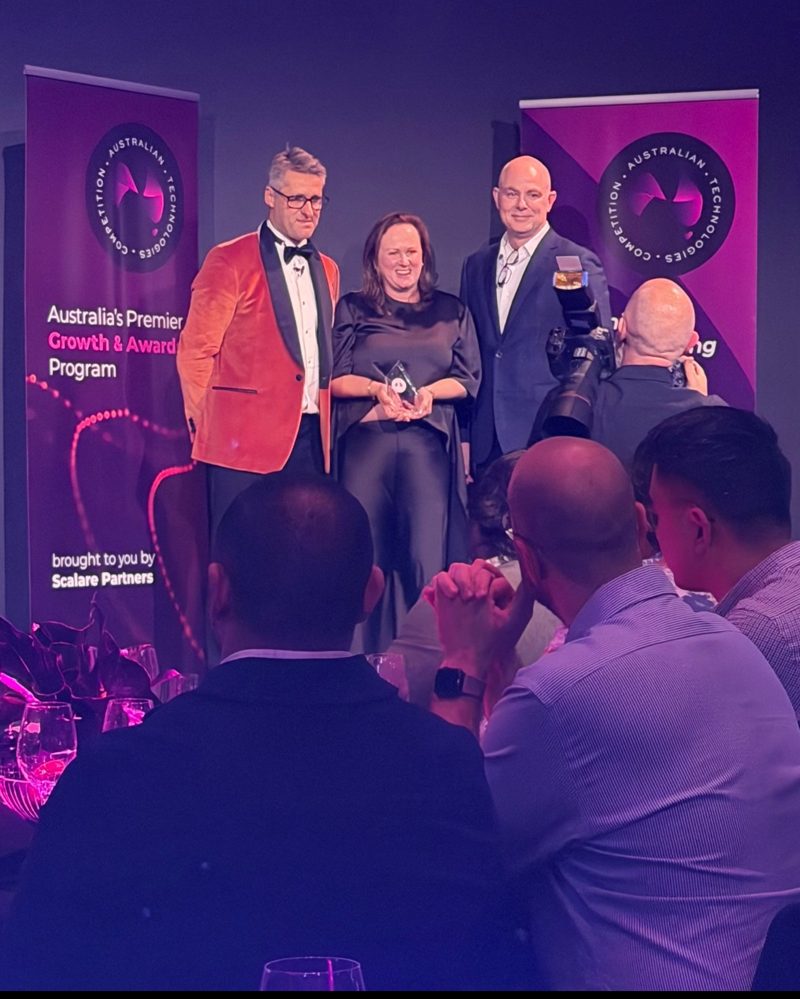
It won the category against three other finalists. The win rested on the company's growth, traction and revenue. Our job was to make sure the judges understood the technology before they reached those numbers.

We start with the story.
We spend the first month of every engagement finding your story. We look for the one idea your audience will remember, then tie it to something they already understand. The website, the pitch, the sales conversations and the content all build on that idea.
If your buyers can't explain what you do after 30 seconds, the problem isn't your technology. It's the story.
What would your buyers lose if your technology disappeared tomorrow?
That's usually where your story starts. Let's find it.